The Background
Covid united us in adversity and demonstrated the benefits of a connected and caring community. Post-pandemic, most have been able to return to some form of normal, however it has left many vulnerable people feeling more isolated than ever. They may have lost touch with previous connections and feel more concerned about going into busy social spaces. Sadly, even in normal circumstances, social interaction can often reduce dramatically when one falls into ill-health, becomes bereaved, enters old age and retirement or when one is single or battling difficult circumstances. The very times when one would benefit from company the most!
It has already been established that loneliness and isolation exacerbate mental health issues and where health services are already overstretched they are frequently unable to offer the time and empathy required by many individuals. People may be craving conversation but are often uncomfortable making the first approach or can only cope with short bursts of interaction. When one is low or lonely it is difficult to find the confidence or motivation to join organised groups and events. Illness and special needs can sometimes make this even more challenging. Even when people have family and friends they may not want to feel that they are a burden in calling on them too often. Oddly, there is also less judgement or expectation when interacting with strangers.
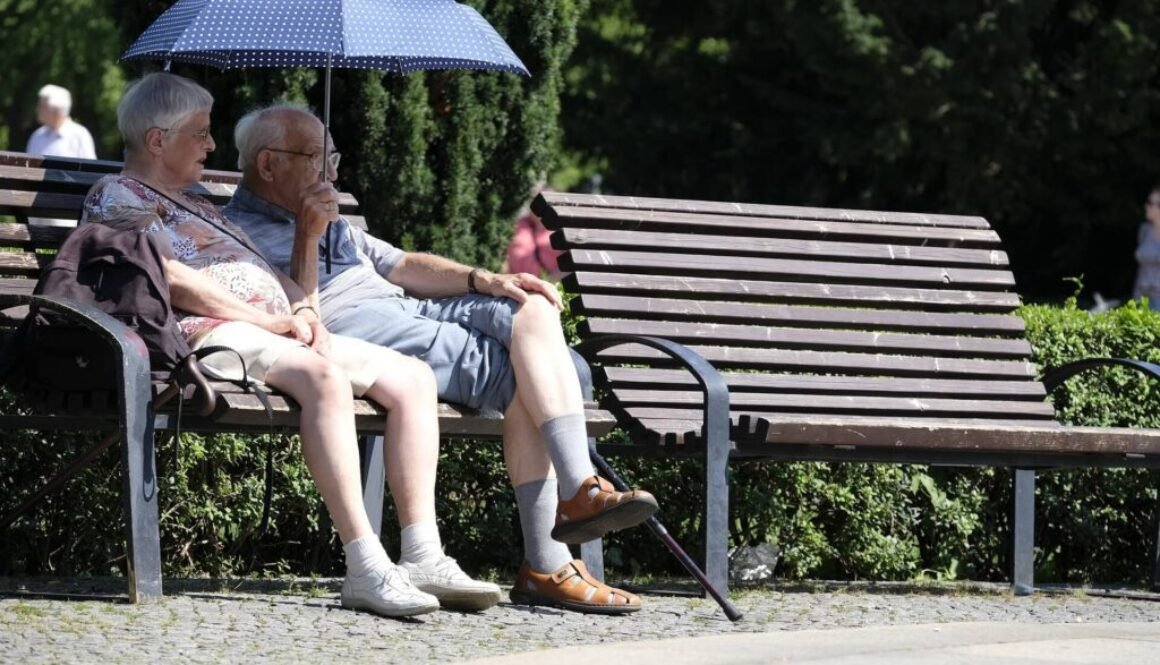
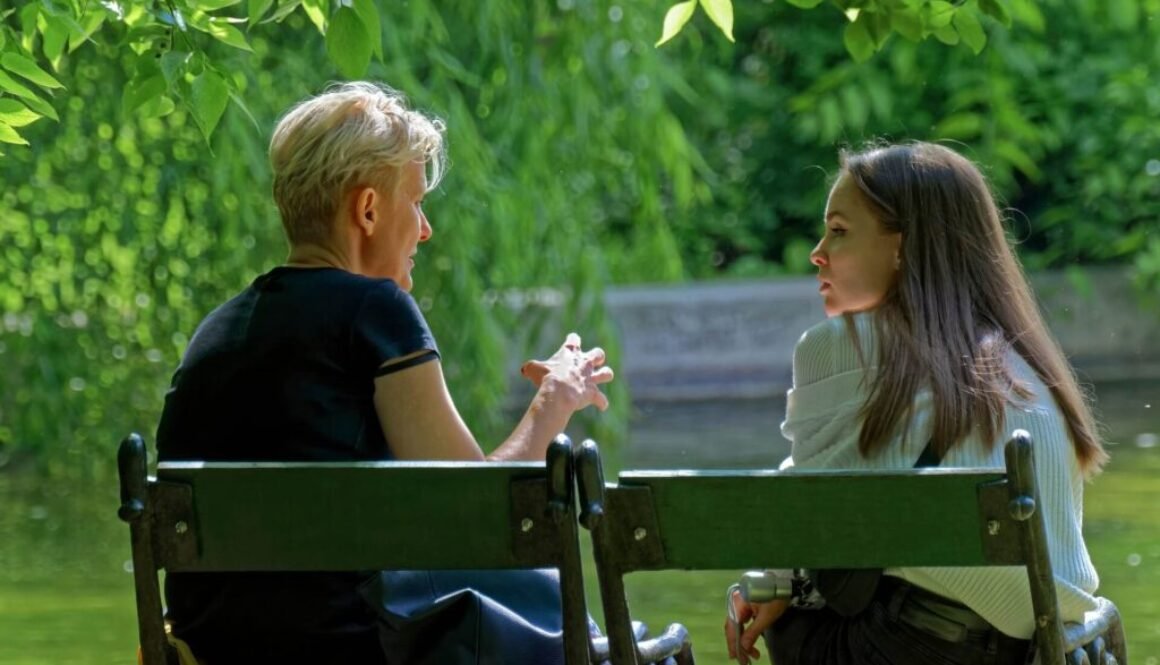
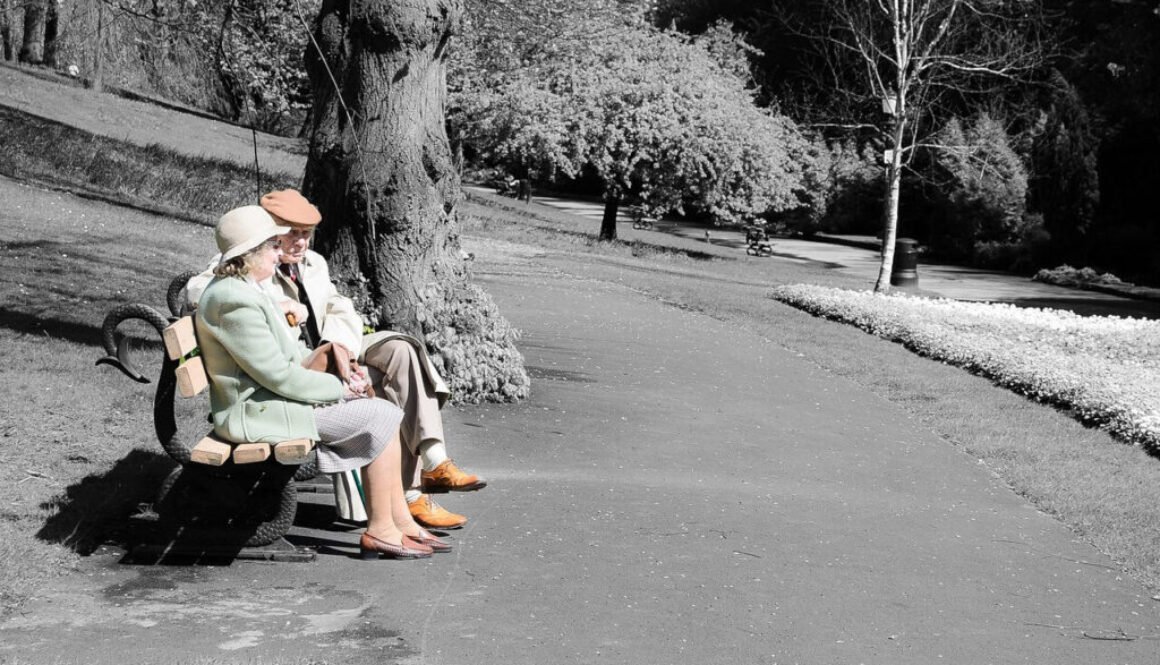
Having worked with many people throughout my career I have seen the impact of these situations and the resulting loneliness. Support members are dropping away over time, leaving people feeling lonely and seemingly invisible. This is especially notable in the elderly population but not uncommon for some in younger generations either. It isn’t always just about company. It is more often about feeling connected to the world around you even if only in a small way. Feeling that one makes a difference or that one means something to another. Research suggests that just five minutes of social contact can provide us with a sense of belonging, improve wellbeing and mental health. Friendly interaction can raise tolerance levels and deepen community spirit. Even five minutes of light hearted banter on a bench with a stranger can raise spirits and keep one connected to the world.
Similar projects
The Warm Rooms project is currently providing shelter for those struggling with heating costs and offers company to the lonely through a winter of hardship. A similar outdoor project called The Friendly Bench is already in existence but only in limited parts of the UK and appears to be established on a more events-focussed basis and requires especially designed seating areas and organised commitment. Age UK and other organisations run befriending services where volunteers are matched for scheduled telephone calls, and there are countless clubs available. Clubs are great for the extroverted amongst us and those with time to commit but are not so good for spur of the moment activity, shy introverts, or those with less free time due to caring roles or other commitments.
Offers of support for charitable causes are often finite and dependant on volunteers and fixed time slots. People are beginning to move on from the restrictions of the pandemic and have less time to spare, and the Warm Rooms project is scheduled to finish in March 2023. There is a general shortage of volunteers within community as people have many more options available to them these days and are less keen to have commitments which tie and restrict their movements. I have seen other successful projects fold once the initial organisers move on to other projects and offers of help dry up when people realise the commitment involved.
Despite these other projects, patients tell me that there is something missing for them on a day-to-day basis. On the flip side, I also have people telling me that they would like to contribute or get involved with a worthy cause but they don’t really know what to do as they don’t feel able to take on any arduous tasks or heavy, regular or scheduled commitments. It is not necessarily that they don’t wish to help but more often that they don’t think to or cannot find the time to do so.
The beauty of the Sociable Seating™ is that there is no regular commitment or obligation required. We can all spare five minutes in passing. Sociable Seating is all about simplifying the ideology behind the existing projects in order to reach more people with less formal commitment and to expand on the ideas of these worthy causes.
Innovation & The Gift of Friendship
The Sociable Seating™ project plans to continue the caring legacy by provision of simple signage attached to a bench that is already in existence, thus allowing the project to be easily and inexpensively rolled out nationwide and beyond with no formal volunteer commitment required. Attachment of an easily recognisable Sunflower Sign™ provides the signal to invite people into conversation with a stranger. Sparing just a few minutes to chat in passing or indeed to stay longer if the conversation suits. In going with a thought to give, one usually receives in return. It means that people would have somewhere to go on the spur of the moment in hopes of finding unplanned conversation. A similar project has been successfully piloted in primary schools to help children find new friends. Why not replicate this idea for the older generations at a time where they too may be lacking confidence to make new friendships.
The gift of friendship can bring as great a reward to the individual giving as it does to the recipient. Another advantage is that neither person will know if the other individual sitting there is the one lonely or the one going with the intent of offering some friendly conversation. This naturally takes away the stigma that some lonely people worry about. In giving a few minutes of companionship one will always receive something of value in return. I can remember times when I have exchanged pleasantries with someone in passing, learning something about their lives, or mine, and coming away with a sense of warmth and raised spirits. Even a negative experience can evoke some humour if one choses to see it that way! It does normally take an invitation to initiate that conversation. The Sunflower Sign would provide the reassurance required to approach a Sociable Seating area, encouraging the opportunity to interact with other people. Dogs are great at breaking that social barrier down but we don’t all have that prop. Haven’t we all found ourselves sitting in waiting rooms staring at the ceiling as we are unsure if conversation would be welcomed or avoiding sitting on the bench where someone is already seated in case we might be violating their quiet space? Wouldn’t it be good to know when conversation is welcomed? I have piloted the idea a few times myself and always found the conversation welcomed.
Locations
We propose that the simple project might be embraced and hosted by the health service with benches found in GP surgeries and hospital grounds. These are generally safe environments with plenty of people around and CCTV surveillance. People visiting these establishments are often either those vulnerable or those with caring empathetic natures willing to help others.
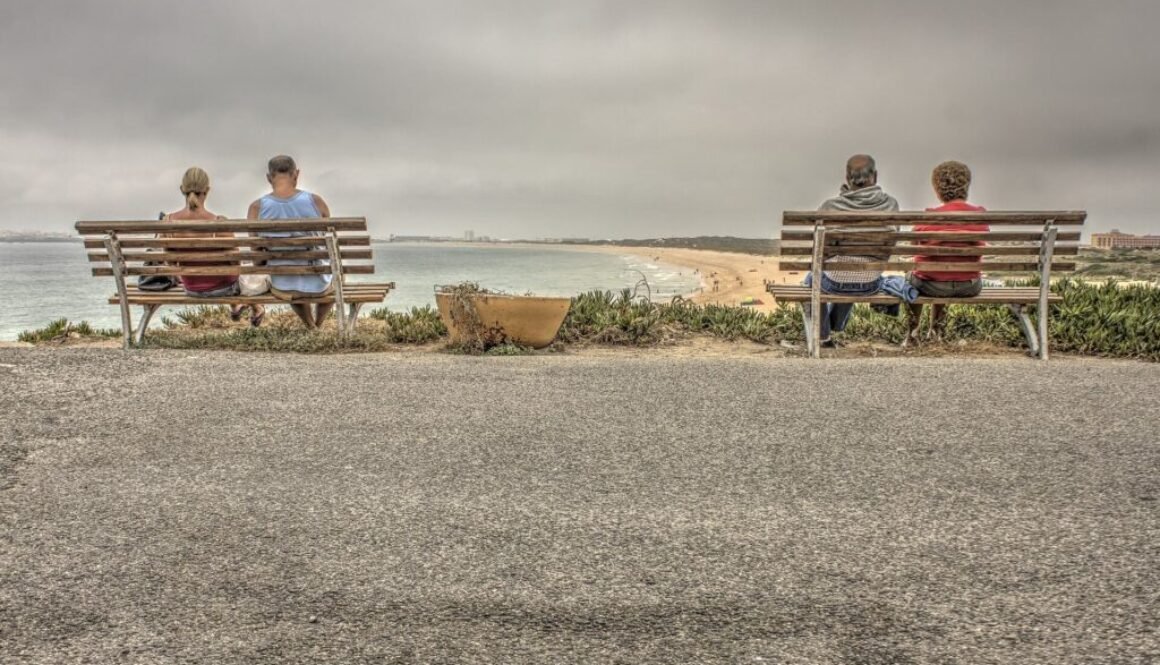
Our thoughts are that the idea could be rolled out under council provision as a community project in parks, seafronts and town centres. Additionally to organisations like the National Trust where people will likely share similar interests. Cinemas or Theatres? Perhaps it would be possible to extend the concept to tables in cafes and restaurants where people would then be able to dine in the company of others instead of dining alone. Single people often find themselves not stopping to enjoy a coffee or a snack as they don’t relish the idea of siting alone but neither do they wish to be involved in organised events specifically aimed at singles or elderly. They just want to stop in a nice cafe for a coffee and a chat like anyone else would do.
Locations can be registered on this website. An interactive map allowing people to easily find the seating options most local to them. We hope, that over time, the Sunflower Sign™ could become a national signal for friendship, easily recognised and used by organisations within their existing facilities to invite conversation amongst strangers.